
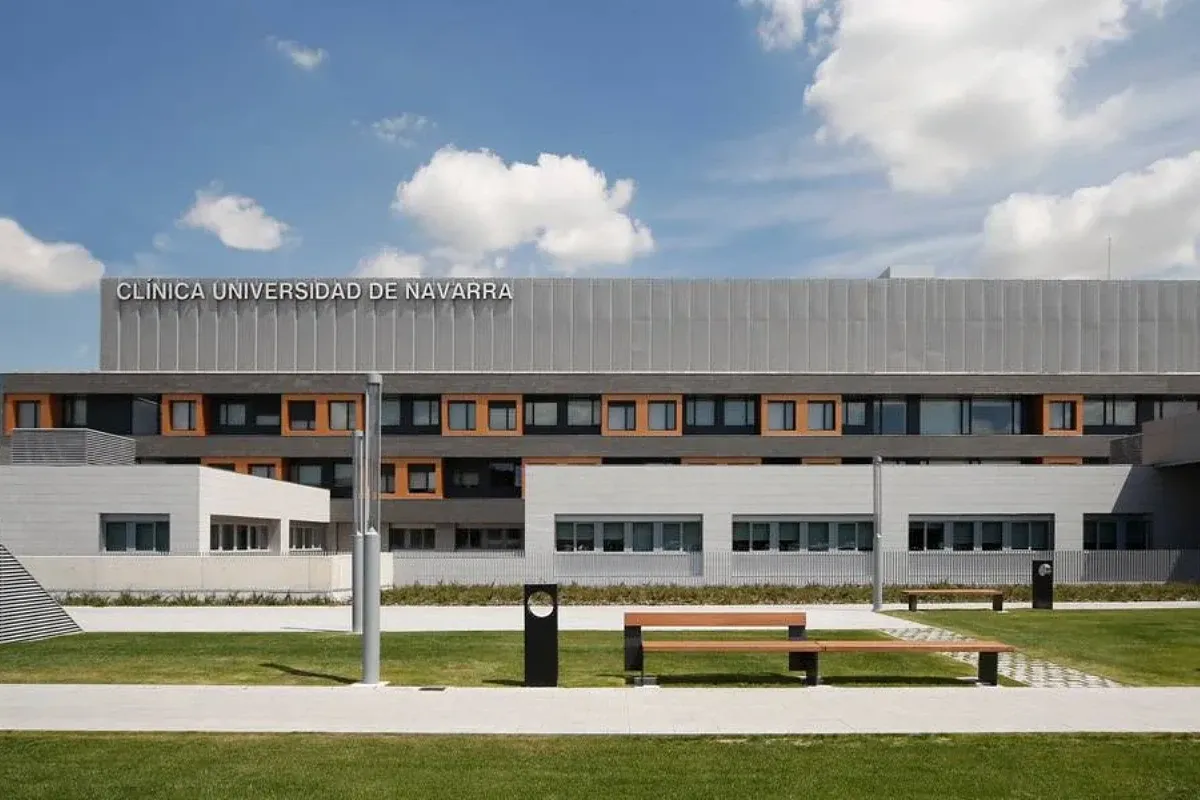
Clínica Universidad de Navarra
About this clinic
Clínica Universidad de Navarra is one of Spain’s leading medical centres, accredited with the JCI Gold Standard for quality. Its main campus is located in Pamplona. The hospital is particularly renowned for its Department of Paediatric Oncology — a multidisciplinary unit providing care for patients aged 0 to 18 with cancer and blood disorders.
The physicians in this department believe their primary mission is to deliver high-quality medical care to children and adolescents, with a focus not only on the patient but also on their family. Each child is treated individually, with careful consideration of their unique characteristics and medical needs, using the full spectrum of available innovations. To achieve this, the team brings together leading specialists across multiple disciplines.
The clinic is equipped with state-of-the-art technology for radiological and molecular diagnostics and employs the most advanced treatment methods. Among these, proton therapy holds a special place as the most precise and modern form of radiotherapy.
The department’s specialists strive to provide children with cancer the most advanced and effective treatments available, improving both their chances of recovery and their quality of life. As the doctors themselves emphasise, they support the child and their family throughout the entire challenging journey — from diagnosis through every stage of treatment and recovery.
Conditions Treated at Clínica Universidad de Navarra
Central Nervous System Tumours:
- Choroid plexus carcinoma
- Craniopharyngioma
- Ependymoma
- Low- and high-grade gliomas, including diffuse intrinsic pontine glioma (DIPG)
- Medulloblastoma
- Other embryonal tumours of the central nervous system
Bone and Soft Tissue Tumours:
- Osteosarcoma
- Ewing sarcoma
- Chondrosarcoma
- Giant cell tumour of bone
- Soft tissue tumours
Haematological Malignancies:
- Leukaemias
- Hodgkin lymphoma
- Non-Hodgkin lymphomas, including: Burkitt lymphoma, Lymphoblastic lymphoma, Diffuse large B-cell lymphoma, Other types of non-Hodgkin lymphoma.
Diagnostics
Doctors in the Department of Paediatric Oncology work closely with the clinic’s key diagnostic services, including radiology, nuclear medicine, pathology, and medical genetics. This multidisciplinary approach ensures highly accurate diagnostics and allows for diagnosis to be established in the shortest possible time.
Thanks to the clinic’s advanced technological capabilities, most required diagnostic tests are completed within less than 72 hours, enabling treatment to begin as quickly as possible.
Technologies used at the clinic include:
- 3 Tesla MRI scanner, ensuring high diagnostic accuracy
- Dual-source CT scanner with ultra-low radiation dose, significantly reducing children’s exposure to ionising radiation — particularly important when repeated scans are required
- PET-CT (positron emission tomography combined with computed tomography)
- Scintigraphy
- Ultrasound diagnostics available daily
Molecular genetic methods have now become an integral part of the diagnostic process. They not only confirm the pathological diagnosis but also allow for a more precise understanding of the biological characteristics of the disease, and in most cases enable the selection of a personalised treatment plan.
Treatment of Paediatric Cancer at Clínica Universidad de Navarra
Brain Tumours Surgical treatment of brain tumours utilises advanced technologies that significantly improve both the effectiveness of procedures and patient safety. These include:
- Fluorescence-guided surgical microscopy
- Intraoperative neurophysiological monitoring
- Intraoperative MRI, allowing real-time control during surgery
These technologies increase the likelihood of complete tumour removal and reduce the risk of postoperative complications.
Bone Tumours Treatment of bone tumours includes intra-arterial chemotherapy combined with organ-preserving surgical techniques. This approach helps сохранить the affected limb and significantly improves the child’s quality of life. Close collaboration with the rehabilitation department also allows for rapid restoration of mobility and a return to an active life.
Haematological Malignancies Treatment of patients with haematological cancers is carried out in close cooperation with the departments of haematology, transfusion medicine, and the cellular therapy centre. These units have extensive experience in developing and applying modern treatment methods based on cellular technologies.
Available treatments include:
- Haematopoietic stem cell transplantation (bone marrow transplantation)
- CAR-T cell therapy
- Dendritic cell vaccine therapy
- Activated lymphocyte therapy
The clinic’s specialists have extensive experience performing both autologous (using the patient’s own stem cells) and allogeneic transplants, including transplants from:
- Related donors
- Unrelated donors
- Haploidentical (partially matched) donors
When to Seek a Second Opinion in Paediatric Haemato-Oncology
- Rare tumours. Childhood cancers are uncommon, and a general practitioner may not always have sufficient experience to establish an accurate diagnosis — which is the first step towards effective treatment.
- Complex tests. It is always advisable to confirm biopsy results at a specialised paediatric oncology centre.
- Diagnostic uncertainty. When doctors are unsure or have differing opinions.
- Aggressive treatment plans. If major interventions are proposed, such as organ removal, intensive chemotherapy, or new and unproven methods.
- Lack of improvement. If treatment is not effective and the child’s condition is deteriorating.
If you feel concerned about your child, or uncertain about the diagnosis or treatment plan, it is advisable to consult leading oncology specialists. This will either confirm that the current approach is appropriate or provide an alternative perspective.